Mike’s Story
Although we are advocating for the commutation or recall of Mike’s sentence, under no circumstances do we intend to suggest that Mike’s former partner does not deserve compassion and understanding. We believe she deserves our support in any way that will help her overcome the trauma from the assault and divorce. We believe supporting Mike by encouraging a trauma-informed sentence and arguing for changes in the law to create uniformity in sentencing is not contradictory to supporting his partner. We have taken an effort to be “non-triggering” in our argument for Mike’s immediate commutation.
Mike’s Mental Health and Success Before the Crime
By describing Mike’s success at overcoming his past challenges, we do not want to imply that Mike is not fully responsible for his actions. We do believe his successes are relevant for providing context related to his crime, and for arguing that Mike will be successful and safe when he returns to society. The best predictor of future behavior is sustained past behavior.
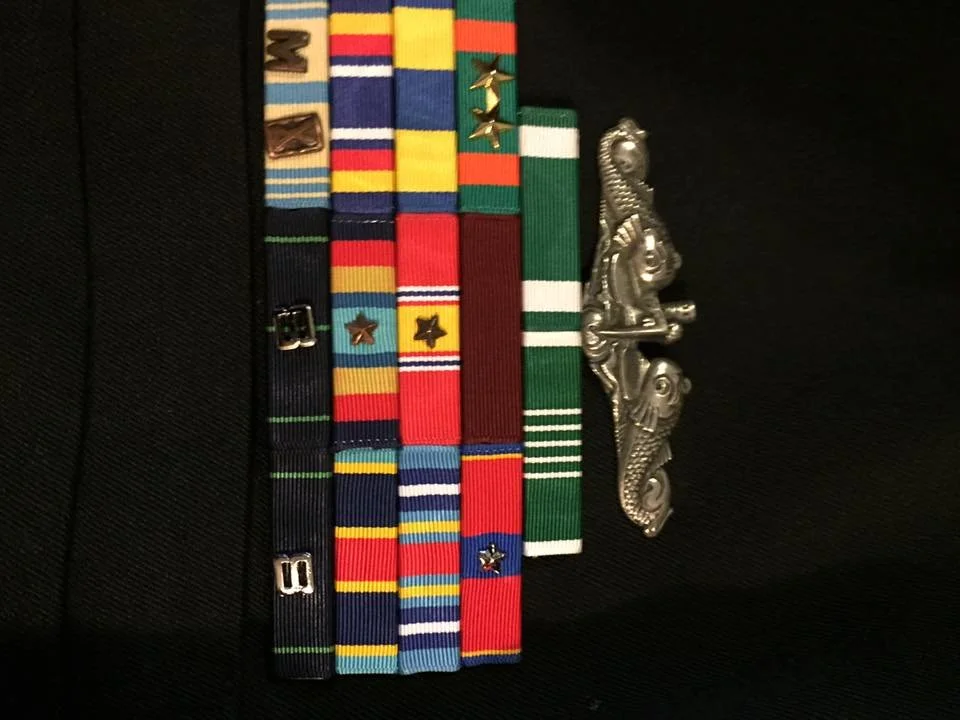
Although Mike suffered severe childhood abuse for over a decade, he was able to successfully complete high school through developing what are now life-long friendships, participating in sports and other school activities, and following the values and lifestyle of Scouting, where he earned the rank of Eagle Scout. Like many individuals who suffered childhood trauma, Mike joined the military and entered the submarine service. After serving in active duty for six years and earning multiple awards for his service (Link), he joined the Naval Reserves and served another 20 years. Mike was mobilized to Iraq and Kuwait in 2006-2007, where he earned multiple medals for his service (Link). In fact, due to his problem-solving skills and ability to manage others, he was awarded the U.S. Army Commendation Medal. He retired with the rank of Senior Chief, and he currently receives a military pension.
During his active duty service, Mike was assaulted and immediately engaged in therapy due to the encouragement of his partner, who was in a college social work program. His diagnosis of PTSD in 1987, and his later experiences in therapy, in large part led to his choice to become a psychologist. Mike earned a Ph.D. in school Psychology (Link), and served as a practitioner (1 year), state consultant at the Iowa Department of Education (1 year), professor at the University of Wisconsin-Milwaukee (2 years), administrative assistant for Long Beach Unified School (1 year), and professor at University of California-Riverside (16 years) (Link). Mike focused on identifying and implementing tools to provide support to at-risk students, with a specific focus on English Learning (EL). Mike trained hundreds of teachers throughout California, and mentored and supervised 14 students who earned their Ph.D.s from the University of California. He was the Director of UC-R’s American Psychological Association (APA) accredited doctoral program in School Psychology, Associate Editor of multiple journals, and the treasurer of the Council of Directors of School Psychology Programs (CDSPP).
Mike was a scout leader, scouting summer camp staff member and program director, and summer league baseball coach for his son for 5 summers. Mike did not have any interaction with the criminal justice system throughout his life until his commitment offense in August of 2014, when he was 50 years old. He received therapeutic support from multiple mental health professionals for the previous 27 years, and when he was arrested, he was under the care of a psychiatrist and taking Wellbutrin. His partner and Mike had engaged in couples therapy months before the assault and had used couples therapy at various stages of their 14-year relationship.
Circumstances of the Crime
The primary circumstance worth noting is that multiple mental health professionals have connected Mike’s actions to an irrational process caused by years of severe trauma and exceptional relationship stress. Unfortunately, in the three years prior to the crime, the couple had experienced exceptional stress, including three failed attempts at in vitro fertilization (IVF) and Stage III melanoma experienced by Mike’s partner. This exceptional stress created an unclear future for their relationship and led to significant conflict and the need for couples counseling.
In August 2014, Mike returned home from a local restaurant and pool hall after spending the day attempting to get his truck repaired. From the beginning, Mike reported he had no memory of the event, which caused significant contusions and lacerations to his partner of 14 years. His partner recorded the entire assault on her phone. She told the police she recorded her partner because he was acting differently than normal, and she wanted him to hear himself the next day.
The recording demonstrates that the couple argued, and Mike alternated between trying to calm his partner down and being verbally abusive and accusing her of being verbally abusive at that time and throughout their relationship. He quickly became uncharacteristically enraged, threatened, cussed, and physically assaulted his partner, which caused contusions to her neck and face. After several minutes of the altercation, the recording contains many minutes of total silence. Mike then asks if his partner is ok, and leaves the room. His partner also left the room and exited the house. She called a friend and went to her home, where she called the police. The police arrived approximately two hours after the crime and arrested Mike. During the police interview, Mike reported he had no memory of the assault.
Since the event occurred, multiple psychologists have opined on the event and stated they believe there is a direct connection between Mike’s prior trauma and the assault. In addition, he was diagnosed with PTSD by the U.S. Department of Veterans Affairs. The psychologists were convinced the crime was driven by trauma, versus the typical roots of intimate partner violence.
Contemporary theories of intimate partner violence differentiate types of abuse by determining whether the relationship includes coercion and control in addition to violence (Peterson et al., 2008). Individuals who engage in coercion and control in addition to violence are categorized as intimate terrorists. In Mike’s case, there were not any signs or accusations of control or coercion, and therefore, intimate terrorism was ruled out. Both individuals were professionals, managed their own finances, had their own friends, and generally lived parallel lives.
The most common form of intimate partner violence is Situational Couple Violence which is typically based on conflicts between the couple. Yet, based on the recording, it appears Mike engaged in a third type of intimate partner violence labeled Violent Resistance. There is research that indicates a common reason individuals engage in violence with their partners is that they were either the victims of prior violence by their partner or they irrationally perceived they were victims. Individuals who suffer severe trauma often irrationally perceive themselves as victims or in a threatening situation when they are not. Throughout the altercation, Mike states “stop” over 70 times, even though his partner was simply lying next to him, and he consistently accused his partner of treating him horribly. His fear that she was harming him was based on clearly irrational thoughts that were connected to his untreated trauma.
Again, we are not suggesting that Mike is not guilty of “Torture” based on the laws that were in place in 2016. We are arguing that the law did not put proper focus on the trauma, based on our knowledge today, and given that he has already appealed his conviction, and the torture conviction rules out some of the newer legal options, Mike cannot benefit from trauma-informed criminal justice policies. These circumstances warrant intervention by the Governor.
Treatment and Recovery Before Prison
Immediately after Mike assaulted his partner, he recognized that what he was doing with his mental health was not working. He worked with his long-term psychiatrist to determine causes for his behavior and treatment options to address his hypervigilance and emotional reactivity. EMDR was selected as an option for treatment due to the success the literature indicated it has for individuals who have suffered from severe trauma. By all accounts, EMDR played a key role in reducing the impact of trauma in Mike’s life and produced results that over two decades of therapy and medication did not. Mike also put a focus on developing new tools to address his trauma and embraced mindfulness, meditation, and positive psychology. By addressing the root of the problem (i.e., the trauma-induced hypervigilance and emotional reactivity), the chances of engaging in any type of violence, including intimate partner violence, were dramatically reduced.
Most importantly, during the 2 years after the crime and before incarceration, Mike was on bail and lived a full and complete emotional life in a way that was foreign to him for the two previous decades. He was able to develop a strong relationship that included emotional engagement and not emotional disengagement. He did not demonstrate any signs of emotional reactivity, hypervigilance, or substance abuse. For the last 10 months prior to his incarceration, he lived with his partner and continued a relationship with her for the first 3 years in prison. She completely supports his release. (Link-Debbie’s letter) Mike essentially engaged in what is best characterized as the treatment side of the mental health diversion programs now built into law.
Failure to Include Trauma in Plea Negotiations and Sentencing
Mike was initially charged with domestic violence and released on $50,000.00 bail. Mike immediately accepted responsibility for causing harm to his partner of 14 years. Mike hired a lawyer and described his background with mental health treatment and the fact that he did not know why he blacked out. Mike did not have a history of drinking in excess, but he did drink while he was taking his prescription medication. He had also been scuba diving the day before and was in his backyard pool with his gear minutes before the crime.
His lawyer immediately engaged in plea negotiations. The attorney informed the prosecutor that Mike was being treated for PTSD, and the circumstances of the crime were consistent with a trauma-induced response. After several weeks of Mike failing to accept the prosecutor’s plea offer of 4 years, a charge of “Torture” was added to his offenses. His lawyer asserted the crime was not torture because the injuries were not consistent with a “great bodily injury”. Mike’s attorney requested that Mike’s case be transferred to Veteran’s court, but apparently, because Mike’s PTSD trauma was caused by an assault and not the product of war, the prosecutor refused. The PTSD law now clearly states that assault is part of military trauma. The law now also states that prosecutors must consider trauma during plea negotiations, and this did not happen in Mike’s case. Again, multiple psychologists argue that Mike’s behavior was clearly and directly influenced by his prior trauma.
Harshness of the Sentence
Mike was found guilty of domestic violence, criminal threats, and torture. He was given the mandatory minimum for torture, which was seven years to life. He was the first and apparently only person in California to be found guilty of “torture” without causing a loss of consciousness, broken bone, bleeding, or hospitalization. (link) Due to the required use of a mandatory minimum sentence, his sentence of 7 to life is unduly harsh and inconsistent with the law currently conceptualizes the impact of trauma.
To meet the requirements for the crime of torture, the prosecution must demonstrate that the defendant caused a great bodily injury. An expert from Kentucky was paid to present his new model to the jury, suggesting that the contusion on the exterior of the neck suggested there were more significant contusions inside the neck. This expert never examined Mike’s partner, and his testimony has been challenged in many different states in the last decade.
It needs to be noted that the choice to add torture to Mike’s charges now prevents him from benefiting from recent changes in the law related to PTSD and prior trauma. This charge was only added after Mike turned down a 4-year prison term offer from the prosecutor due to his belief that his trauma should be included in the decision-making. Just 4 years later, the law did change through CA AB124 in 2021, and prosecutors now must consider prior trauma during plea negotiations. Mental health diversion programs are now emphasized, and this is essentially what Mike did by engaging in EMDR and CBT immediately after his crime.
Mike’s Behavior in Prison
Mike’s focus on wellness, meditation, mindfulness, and managing emotional reactivity continued once he arrived in prison. He has completed over 30 correspondence courses focused on issues of recovery, anger, substance abuse, mental health, and wellness. He also completed multiple courses offered by the prison, including victim awareness, anger management, and substance use disorder treatment. (link) In addition, Mike co-facilitated with a staff social worker a small group trauma recovery course for veterans focused on beliefs, mindfulness, and meditation. (link) He also facilitated the Veterans In Prison (VIP) group for over 4 years, where he helped implement the SMART Recovery self-help group and the iRest trauma recovery program.
As part of his wellness work, Mike also focused on providing service to others by working as a GED tutor for over 5 years. He played a significant role in helping over 50 individuals obtain their GED. Due to his background, he was selected to serve as the tutor for the in-person college program from Chaffey College, and helped several individuals obtain associate's degrees. Mike continued his commitment to education and completed associate's degrees in business, math, and science. (link) He is also enrolled in a Master's in Business (MBA) correspondence program.
Mike’s prison behavior was noticed by multiple prison staff who wrote support letters (link), and he was designated as non-violent by the prison. He has not committed any violations or had any conflicts while in prison. Several fellow inmates also noticed his dedication to service and wrote letters of support. (link)
Mike in the Future
Because of his past success, his commitment to treatment, his development of additional skills, and his strong social support system, there is every reason to believe Mike will continue on the path he started after receiving advanced treatment (i.e., EMDR) for his PTSD. Mike’s family and friends are fully committed to helping him make the transition back to freedom. He has access to retired military benefits, a retirement fund from his 17 years of service to the University of California, and military disability benefits.
There is every reason to believe Mike will be able to continue his service to others as a School Psychology professor or in another capacity. Several faculty colleagues and his mentor wrote letters of support and committed to helping him return to his profession if he desires. (link) Mike’s experience living with and getting to know individuals with significant life challenges can only benefit his ability to help others once he is released. He now has a unique combination of academic knowledge and lived experience that will guide his future service.
The Parole Board Is Not Trauma-Informed
Over the last decade, several laws were implemented in California designed to make the criminal justice system more trauma-informed. (link) Unfortunately, the changes do not apply to individuals who commit certain crimes, including the “torture” charge, or only apply if the court decides to recall a sentence. Based on current law, Mike is excluded from either of these routes for release and cannot benefit from California’s criminal justice system’s increased understanding of the connection between trauma and what is defined as criminal behavior.
Without a cultural shift in the way the board understands trauma, we are convinced they will continue to misinterpret statements about trauma as the root of the problem as a “lack of insight” and blame shifting. The board interprets the presentation of a disorder like PTSD as an attempt to say a criminal act did not occur, versus looking at the use of PTSD as an explanation for the behavior. Mike has not suggested that he is innocent of committing a crime. When he brings up PTSD, he is simply providing a demonstration of insight by connecting severe trauma to his actions.
An understanding of the connection between trauma and behavior is actually essential for getting the right treatment, which is what Mike did when he participated in EMDR and embraced mindfulness and meditation. The board demonstrated a lack of understanding of trauma when members stated they don’t understand the term dissociation, and that he must remember the event before they will consider him safe. (link) In fact, dissociation and/or blackouts do happen for individuals who have suffered from severe trauma, and are characteristics of several trauma-based disorders, including PTSD. It is important to note the board also stated Mike does not need any additional courses or rehabilitation knowledge. They chose to keep him in prison because he does not remember the event (link), which is clearly a characteristic of PTSD.
Need for Changes to State Law
In addition to helping us encourage the Governor to provide a commutation for Mike, we also hope you will endorse our request to get California politicians to make revisions to state law to try to prevent further individuals who suffer severe trauma from being treated harshly and without uniformity. We ask that California legislators take immediate action to address significant limitations with current state law:
The Board of Parole Hearings should become trauma-informed and be required to accept prior trauma and the changes prior trauma causes in the brain as a form of insight for criminal behavior in a manner that is consistent with recent changes in law,
Mandatory minimum sentence should be removed from sentencing guidelines.